
TL;DR: Model Context Protocol (MCP) is an open JSON-RPC 2.0 specification that replaces messy $M \times N$ custom tool adapters with a clean $M + N$ star topology, decoupling AI hosts from heterogeneous data sources just like LSP decoupled compilers from IDEs. However, MCP is purely a stateless transport pipe—it does not provide execution determinism, self-healing, or loop defenses. Production-grade agentic delivery requires binding MCP tools under deterministic AI Workflow Orchestration and strict DAG Engine state machines.
- Specification: modelcontextprotocol.io · Empirical Reference: GitHub - FerryCat
- Prior Post: 📖 Why I Started Building FerryCat: When Two AI Coding Hosts Live on the Same Desktop
Over the past six months of building autonomous developer agents and local toolchains, the single most frequently debated acronym has been Model Context Protocol (MCP).
Some claim it is the “final missing piece of AGI,” while skeptics dismiss it as nothing more than re-branded JSON over standard pipes. While engineering AI Workflow Orchestration pipelines and the FerryCat cross-host review bus with AI pair programming, I studied the official specification, dug into the TypeScript SDK, and ran exhaustive multi-process failure benchmarks on local machines.
MCP is neither unapproachable magic nor a superficial HTTP wrapper. Its true engineering significance lies in solving a fundamental fragmentation problem: dismantling the isolated, proprietary tool silos that have plagued the LLM ecosystem.
1. The Core Bottleneck: Why Do We Need MCP?
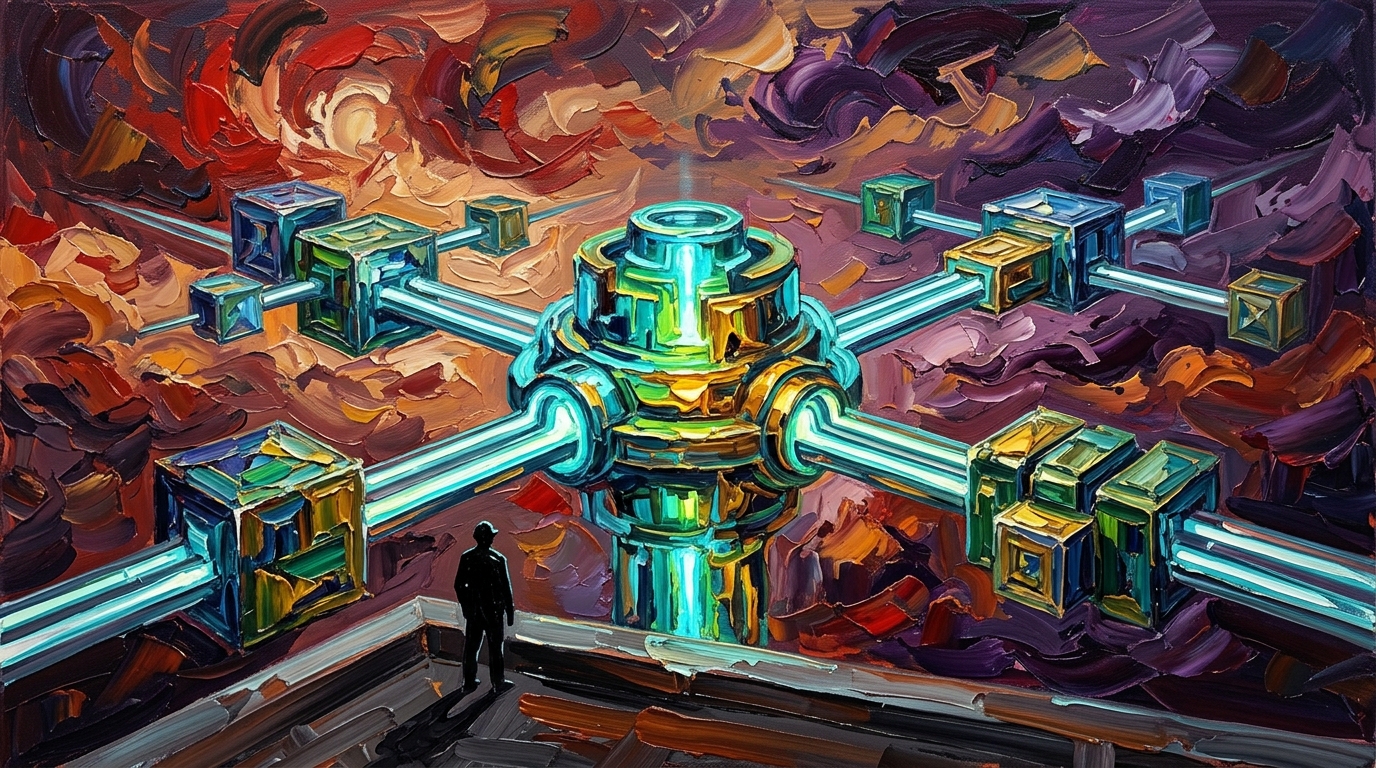
Before MCP emerged, connecting an LLM to external environments forced developers into a combinatorial nightmare.
Imagine authoring a simple tool that inspects local Git commit histories. To expose it inside Claude Desktop, you wrote a custom adapter. To support Cursor, you studied a separate plugin API. To integrate it into a custom CLI agent, you hand-rolled proprietary Function Calling JSON schemas.
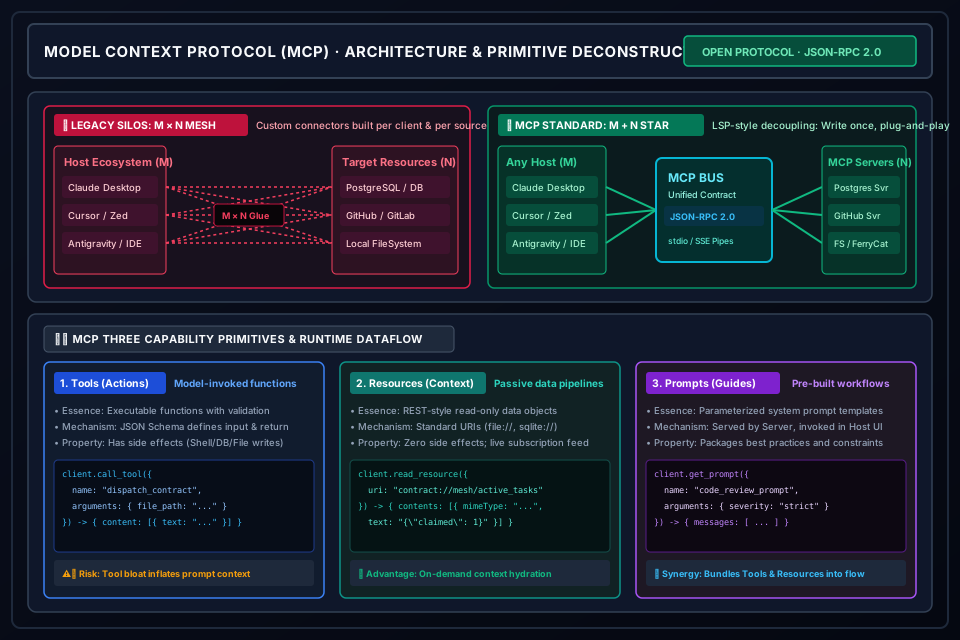
When the ecosystem contains 5 leading AI desktop hosts and you need access to 10 local or remote resources (databases, Git providers, terminal daemons, local filesystems), the community ends up writing and maintaining $5 \times 10 = 50$ distinct glue connectors. Any breaking change on an upstream host invalidates dozens of downstream plugins.
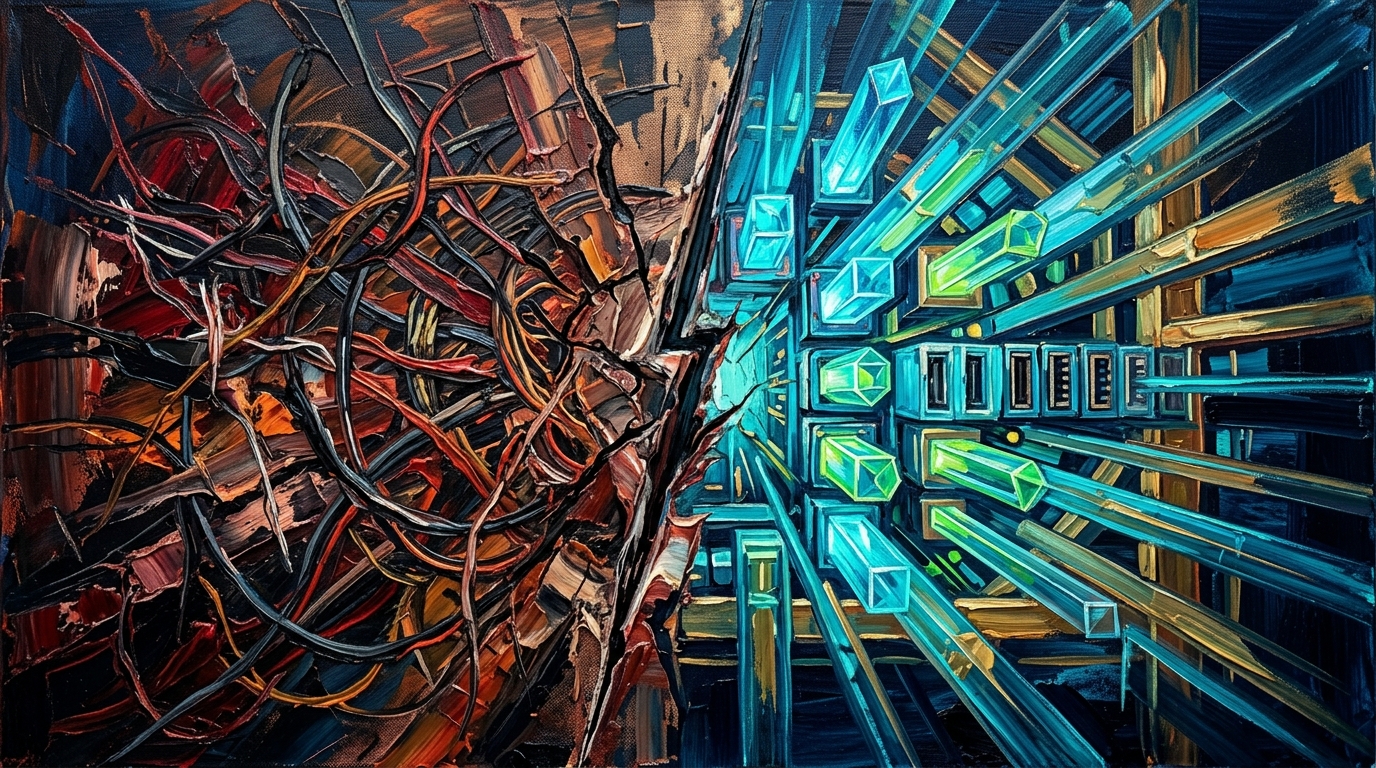
This mirrors the crisis that code editors faced a decade ago. Before Microsoft introduced the Language Server Protocol (LSP), implementing syntax highlighting, jump-to-definition, and refactoring across $N$ languages in $M$ editors was an unsustainable $O(M \times N)$ sinkhole. LSP standardized the JSON-RPC interface, decoupling editor clients from language servers.
MCP achieves the exact same architectural transformation: collapsing M × N to M + N. Host applications only need to maintain a single MCP Client, while tool authors only build a single MCP Server. The two communicate over a unified, plug-and-play contract.
| Architectural Dimension | Proprietary Plugins / Custom Function Calling | Model Context Protocol (MCP) Standard |
|---|---|---|
| Topology | Tightly-coupled mesh (Each host builds custom bridges) | Decoupled star topology (Host/Client connects to any Server) |
| Portability Boundary | Trapped within specific platform or vendor silos | Write once, interoperable across Claude, Cursor, Antigravity |
| Transport Mechanism | Proprietary internal APIs or ad-hoc HTTP endpoints | Standard JSON-RPC 2.0 (High-speed stdio and remote SSE) |
| Capability Model | Monolithic, mixed callback declarations | Orthogonal three-tier primitives (Tools, Resources, Prompts) |
| Integration Cost | Linear overhead scaling with every host release | Zero-friction local integration adhering to typed contracts |
2. Runtime Topology and Three Capability Primitives
Understanding MCP starts with its three runtime layers:
Host: The user-facing application (e.g., Claude Desktop, Cursor, Antigravity, or an autonomous CLI agent). The Host manages the LLM conversation, renders UI, negotiates user permissions, and decides when to trigger external tools.Client: The protocol adapter embedded inside the Host. It maintains a 1:1 session connection with an individual MCP Server, handling protocol handshakes and message dispatch.Server: A standalone lightweight process exposing discrete capabilities, read-only system context, or domain logic to the Client.
MCP specifies two official transport layers: stdio (standard input/output pipes), which provides lightning-fast local process-to-process communication with zero network latency, and SSE (Server-Sent Events) over HTTP POST, tailored for containerized or cloud deployments.
On top of this runtime, the protocol formalizes three orthogonal capability primitives:
1. Tools
Tools are dynamic functions that the model actively decides to call during reasoning. Every tool is defined by a strict JSON Schema specifying input parameters and return shapes. Unlike read-only feeds, tools carry real-world side effects: updating a database, spawning a child process, or dispatching an audit contract in FerryCat. When a Host receives a call_tool request, it typically enforces human-in-the-loop authorization before execution.
2. Resources
Unlike state-mutating tools, Resources provide passive, read-only data exposure inspired by REST architecture. Every resource is addressed via a unique URI scheme (e.g., file:///workspace/src/index.ts or sqlite:///mesh/contracts). Clients can fetch resource payloads on demand or subscribe to live push notifications when the underlying data changes, hydrating the model’s context window without side-effect risks.
3. Prompts
Prompts are pre-engineered templates registered by the Server to streamline user-agent workflows. They accept dynamic runtime arguments and package multi-role instructions, task constraints, and resource references into a structured context bundle. This allows developers to distribute operational best practices directly alongside their tools.
3. Real-World Engineering Pitfalls: The stdio Stream Trap
While designing the local daemon for FerryCat, I needed heterogeneous desktop AI hosts to interact with a shared contract bus without exposing open network ports. During this architectural milestone, human-AI co-discovery surfaced an essential physical reality:
From a product and developer experience standpoint, I insisted that the tool require zero network configuration, zero port-binding collisions, and zero cloud API keys. The ideal UX was simple: launching the desktop host automatically spawns a local child process, and closing the host terminates it cleanly.
My AI collaborator agreed that an in-process Node.js daemon using stdio was the cleanest sandbox boundary. However, during live integration testing, the AI partner highlighted a fatal vulnerability: the stdio buffer-poisoning trap.
In stdio transport mode, parent and child processes exchange raw JSON-RPC 2.0 messages over standard input (stdin) and standard output (stdout). Every single emitted frame must be valid, well-formed JSON.
If a developer—or an uninspected third-party dependency—emits a single debugging statement like console.log("Database connected"), that plain text string is injected directly into stdout. The MCP Client’s parser immediately crashes with SyntaxError: Unexpected token, instantly severing the connection pipe.
To survive in production, every application-level log must be strictly redirected to stderr:
import { Server } from "@modelcontextprotocol/sdk/server/index.js";
import { StdioServerTransport } from "@modelcontextprotocol/sdk/server/stdio.js";

// Diagnostic tracing MUST be redirected to stderr to protect stdout framing
function safeLog(message: string): void {
  process.stderr.write(`[FerryCat MCP Debug] ${message}\n`);
}

const server = new Server(
  { name: "ferrycat-bus", version: "1.0.0" },
  { capabilities: { tools: {}, resources: {} } }
);

const transport = new StdioServerTransport();
await server.connect(transport);
safeLog("MCP Bus connected cleanly via stdio.");
This verification confirmed a timeless engineering truth: protocol beauty is worthless if you neglect process stream hygiene in physical desktop environments.
4. Architectural Trade-offs and System Boundaries
Technical communities frequently over-hype emerging protocols. Engineering, however, is the science of trade-offs. MCP solves connection interoperability, but it introduces distinct operational costs:

1. Context Window Bloat and Token Depletion
Every MCP Server mounted to a Host injects its complete tool catalog—including verbose JSON schemas and descriptions—into the system prompt upon session initialization. If you mount five servers containing dozens of tools, thousands of precious context tokens are consumed before the user types their first prompt.
This bloat inflates per-turn inference costs and triggers “Lost in the Middle” attention degradation. When an LLM faces an excessively crowded tool menu, parameter hallucinations and tool-selection error rates climb significantly.
2. Standardized Transport Is Not Execution Determinism
Many teams mistake tool interoperability for autonomous capability. They assume that hooking up an MCP server will magically enable an agent to solve complex, multi-step business logic.
MCP hands the model a set of screwdrivers and wrenches, but it cannot prevent the model from using a wrench on a screw. It is not an autonomous execution engine; it is a communication cable. When executing mission-critical workflows involving branching logic, transactional rollbacks, and cycle prevention, unstructured function calling breaks down.
Reliable production delivery demands pairing MCP with higher-level deterministic workflow rails and a strict DAG Engine. The DAG orchestrates topological dependencies and watchdog circuit breakers, while MCP serves underneath as the stateless atomic execution layer.
3. Privilege Escalation and Indirect Injection Risks
Unlike remote SaaS APIs gated by OAuth permissions, local MCP servers often run with host-level privileges: writing to disk, modifying configs, or executing arbitrary shell commands.
If an autonomous model processes untrusted external input (such as unsanitized web content or unvetted pull requests) while holding access to privileged MCP tools, an indirect prompt injection attack can trick the model into issuing destructive commands. Production hosts must implement strict whitelist boundaries, path sandboxing, and explicit user-confirmation modals for sensitive operations.
5. Conclusion
Throughout software history, major leaps in productivity have consistently followed the adoption of standardized open protocols: TCP/IP unified networking, HTTP unified hypermedia, and LSP unified programming languages. MCP is now establishing that foundational universal interface between intelligent agents and real-world tools.
It dramatically reduces integration friction. Yet, as tool connectivity becomes commoditized, competitive advantage will shift away from who connects the most tools, and toward who can orchestrate those tools within robust, resilient, and deterministic state architectures.
FAQ
How does MCP differ from traditional OpenAI Function Calling?
Function Calling is a model-level feature that parses natural language into JSON arguments. MCP is a higher-level protocol standardizing how tools, read-only data (Resources), and prompts are discovered, served, and authenticated across heterogeneous hosts (Claude, Cursor, custom agents) without vendor lock-in.
Can I run MCP servers without an internet connection?
Yes. When using the stdio transport, the MCP Server runs as a local child process communicating entirely over standard OS I/O streams. It operates 100% offline with zero cloud latency.
Does MCP replace workflow orchestration frameworks like PatchCat?
No. MCP is an atomic execution pipe, not an orchestrator. It possesses no awareness of graph topology, cycle detection, or multi-step rollback. Reliable systems use AI Workflow Orchestration engines to direct control flow, calling MCP tools only at individual execution nodes.
About the Author
Guo Qiang (GuoBug) is a Product Engineer focusing on platform architecture, commercial growth, AI Workflow Orchestration, and deterministic state engines.
Open-Source Projects & Website: GitHub - GuoBug · https://guobug.github.io
Welcoming in-depth discussions on DAG runtime systems, topological scheduling, and developer ergonomics.