
Open-Source Repository: https://github.com/GuoBug/PatchCat
Interactive Web Demo: https://guobug.github.io/PatchCat/
TL;DR: An AI-Native application is not a legacy CRUD tool with an LLM chat bubble pasted onto its sidebar. As IBM formulated: “If you remove the AI, the product not only fails to function, but loses its entire reason to exist.” Drawing from our production implementation in PatchCat, this visual guide breaks down how native software couples probabilistic reasoning engines with deterministic graph state machines to deliver industrial-grade reliability.
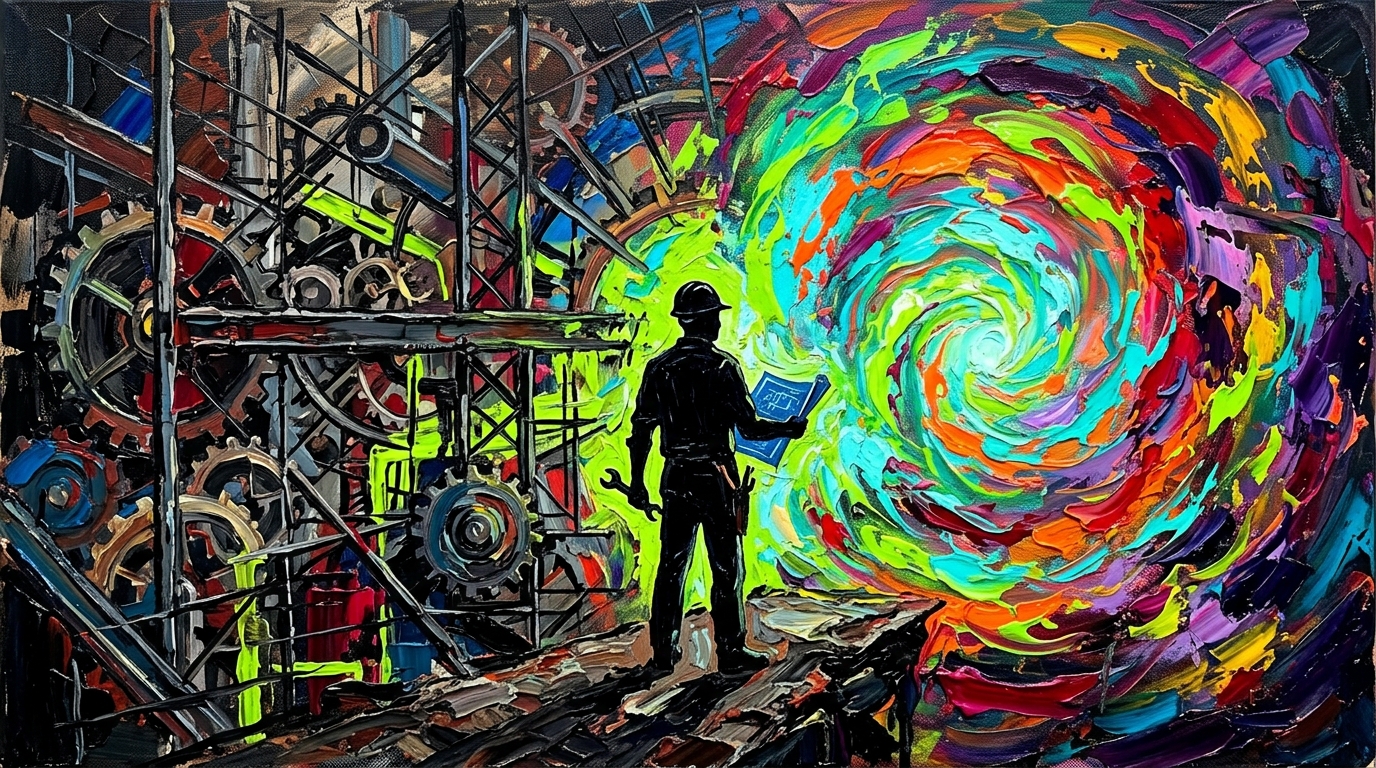
1. The Core Litmus Test: What is a Genuine AI-Native Application?
The software industry is flooded with applications claiming to be AI-Native, yet most are superficial wrappers. There is a decisive litmus test to separate genuine native architectures from marketed illusions:
“If you sever the LLM API connection, can the software still execute its primary workflow?”
If the answer is “Yes, it simply reverts to a standard form-filling interface,” the product is merely traditional software with an AI add-on. It is the modern equivalent of mounting a small battery-powered fan on an 18th-century horse-drawn carriage: while electrified, its chassis, transmission, and operating logic remain firmly anchored to livestock.
True AI-Native software is conceived from day one around generative reasoning as its primary powertrain:
- Generative reasoning is the heart: The model shoulders non-fungible duties such as ambiguous intent resolution, multi-step goal decomposition, unstructured data synthesis, and runtime code generation;
- Deterministic engineering is the skeleton: Autoregressive models are probabilistic sampling engines prone to hallucinations and non-deterministic drift. Native applications build rigorous engineering safeguards to confine probabilistic variance within predictable bounds;
- Interaction is structured partnership: Humans and systems do not interact through opaque prompt guessing or passive menu clicking, but through inspectable, bidirectional execution feedback loops.
To visualize this generational divide, the architectural differences between a legacy wrapper and a native workflow engine are mapped below:

2. The Core Conflict: Why Legacy Product Mental Models Fail in AI-Native Systems
Why do users frequently complain that software feels more brittle after teams inject an LLM into it?
The friction stems from a fundamental divergence in computational primitives:
Traditional software operates on deterministic Turing mechanics:
- Inputs are explicitly validated, and internal code branching is fully reproducible;
- When a user triggers an action, the program follows hardcoded pathways, never deviating unless code bugs exist.
An AI-Native application, conversely, relies on large language models as probabilistic predictors:
- They excel at fuzzy semantic parsing, creative synthesis, and generalized reasoning;
- Yet they are inherently vulnerable to sampling variance, hallucinations, schema drift, and attention decay.
Many teams treat LLMs as just another reliable REST API, attempting to build AI features with CRUD intuition. While developing PatchCat, our open-source workflow orchestrator, this mismatch quickly collided with three engineering brick walls:
- Canvas Topology Deadlocks: When users connect multiple reasoning steps visually, they inadvertently introduce hidden cyclic dependencies that cause scheduling engines to stall indefinitely;
- Context Memory Collapse: Naively appending multi-turn dialogue history dilutes attention budgets, causing models to suffer from catastrophic forgetting and goal drift;
- Single-Point Failure Cascades: In a multi-step pipeline, an unexpected JSON parsing error in step five instantly destroys the entire execution trace, forcing users to restart from step one and burn expensive tokens.
This reveals the central design thesis of AI-Native engineering: AI-Native is never about letting models roam unconstrained—it is about establishing rigorous engineering contracts to safely channel probabilistic intelligence along deterministic tracks.
3. Visual Architectural Primitives: How PatchCat Implements AI-Native Design
In the realm of AI Workflow Orchestration, PatchCat transforms fragile single-prompt queries into robust, inspectable state machines.
1. From Unstructured Chat Streams to Topological State Machines
Generic AI tools compress system instructions, reference context, and conversational turns into one massive, unstructured text stream. This causes context contamination and prevents targeted debugging.
PatchCat deconstructs complex pipelines into a structured DAG State Machine (Directed Acyclic Graph) composed of discrete, specialized nodes:
- Input Nodes: Establish strict schema contracts for incoming payloads;
- Prompt Nodes: Manage isolated templating, slot-filling, and prompt versioning;
- Model Engine Nodes: Encapsulate provider-specific inference configurations (Temperature, Top-P, max token caps);
- Code Sandbox Nodes: Execute sandboxed JavaScript or Python for zero-hallucination mathematical validation and data cleaning;
- RAG Retrieval Nodes: Perform hybrid BM25 and vector retrieval to supply verified private context;
- Condition Router Nodes: Direct execution branches based on boolean assertions or semantic criteria.
Under the hood, the runtime engine deploys Kahn’s topological sort algorithm to evaluate node in-degrees before dispatching execution wavefronts. Cycles are detected and intercepted before a single network call is issued, guaranteeing that downstream nodes only run once all upstream data dependencies have resolved.
2. From Context Black Holes to Dual-Anchor Atomic Transaction Pruning
Traditional applications often suffer from the “lost-in-the-middle” dilemma where models forget their original mission. Uncapped array append operations exhaust context budgets on noisy intermediate scratchpads.
PatchCat addresses this via a dual-anchor sliding window pipeline:
- System Anchor: Locks
messages[0](system role) andmessages[1](original user intent) as immutable anchors that are never evicted, preserving prefix key-value caches and preventing goal drift; - Sliding Window: Maintains an active window over recent conversational turns;
- Atomic Transaction Compaction: Compresses verbose intermediate tool outputs into high-entropy key-value pairs once consumed by adjacent nodes.
This memory pipeline stabilizes inference latency while ensuring prompt tokens remain strictly focused on active reasoning targets.
3. From Blind Trial-and-Error to Checkpoint Resumption and Watchdog Breakers
When an eight-node pipeline fails on step seven due to a malformed model response, legacy software forces the user to re-run everything from scratch.
PatchCat incorporates an immutable JSON Checkpoint architecture:
- Each node execution state and output payload is recorded immediately into an immutable snapshot;
- When a downstream node experiences network timeouts or formatting errors, the scheduler triggers a reverse breadth-first search (Reverse BFS) to compute the minimal affected subgraph;
- Users can resume execution instantly via Deterministic Workflow checkpoints, skipping cached ancestor nodes (consuming 0ms and 0 tokens) and retrying only the failed node;
- For nodes housing autonomous agent loops, runtime watchdogs track tool invocation signatures. If identical arguments repeat three times, the watchdog injects corrective hints to break the loop or trips a hard circuit breaker to prevent token hemorrhaging.
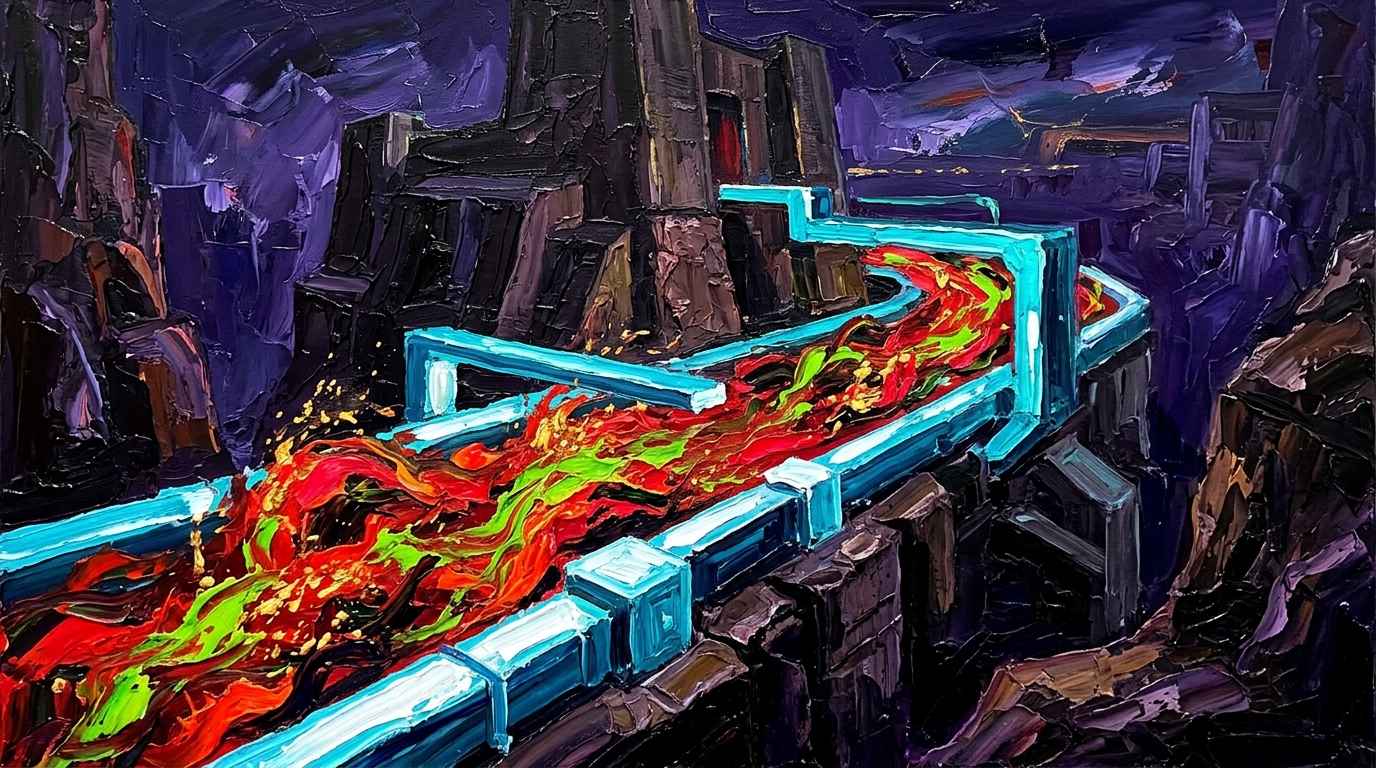
4. Architectural Philosophy: Guiding Probabilistic Power with Deterministic Rails
Large language models represent a profound cognitive shift in software engineering: for the first time, computers can interpret messy human intent and extract patterns across unstructured corpora.
Yet reliable software must still rest upon bedrock certainty. Accounting ledgers cannot tolerate numbers that are merely “likely accurate,” healthcare software cannot accept hallucinations, and automated production pipelines cannot crash because an API sampled an unusual token.
Building AI-Native systems is not about choking LLM creativity with brittle rules, but rather about constructing dams and aqueducts to channel wild generative torrents.
In a mature architecture:
- The LLM explores the upper bounds: ideation, semantic abstraction, and fuzzy reasoning;
- The state machine guards the lower bound: topological scheduling, schema validation, persistence, and automated failover.
This division of labor defines the foundation of dependable AI systems.
5. Engineering Trade-offs, Cognitive Friction, and Limitations
A credible architectural review must transparently confront systemic trade-offs. While developing PatchCat, we identified three concrete operational friction points:
1. Visual Node Composition Imposes Higher Cognitive Load Than Simple Chat
A chat box offers near-zero onboarding friction, but also minimum operational control. Decomposing tasks into visual node graphs demands modular thinking: users must understand variable bindings, handle connections, and branch logic. For users seeking quick conversational answers, a DAG editor feels overly heavyweight.
To mitigate this, PatchCat provides ready-to-use template galleries and preflight linting to guide new users through initial pipeline construction.
2. Client-Side DOM and Canvas Rendering Limits on Massive Graphs
PatchCat embraces a Local-First philosophy, executing entirely in client browsers. When a single workflow expands beyond 80 nodes and 120 edges, React Flow canvas panning and drag-re-rendering can cause perceptible frame drops on lower-spec hardware, dipping from 60 FPS down to 35 FPS.
Sustaining high responsiveness requires aggressive off-screen node virtualization and stripping unnecessary event listeners from non-active nodes.
3. Semantic Fragmentation from Excessive Atomic Decomposition
Slicing complex workflows into dozens of micro-prompt nodes ensures local determinism, but can dilute the model’s global understanding of overarching goals. Nodes operating in silos may produce outputs that feel mechanically stitched together.
Pipeline designers must strike a balance when sizing node boundaries, avoiding micro-optimization that starves core nodes of requisite contextual nuance.
6. Conclusion: Moving from Buzzwords to Production Delivery
From basic prompt chaining to our current architecture featuring topological preflight linting, dual-anchor context compaction, and zero-dependency browser search, PatchCat’s evolution proves a central engineering truth:
AI-Native is not a superficial marketing label. It asks engineers to discard the illusion of model omnipotence, respect the immutable laws of computer systems, and strike an unshakeable balance between probabilistic reasoning and deterministic controls.
FAQ
What is the mathematical litmus test for an AI-Native application?
The definitive test is causal indispensability: if you set the model invocation probability or response vector to null, does the software collapse entirely? If the primary workflow can still execute through legacy deterministic fallbacks, the system is a “+AI” wrapper. In an AI-Native system, the generative engine performs essential cognitive routing and synthesis without which the pipeline cannot proceed.
Why does PatchCat use Kahn’s algorithm for client-side DAG scheduling?
Kahn’s algorithm operates with optimal time complexity of $O(|V| + |E|)$. Unlike simple depth-first search (DFS) which outputs a flat sequential order, Kahn’s algorithm partitions graph nodes into distinct Wavefront Concurrency matrices based on zero-in-degree resolution. This allows independent nodes in the same wavefront to execute in parallel while guaranteeing topological ordering.
How does dual-anchor pruning prevent the “lost in the middle” attention degradation?
Transformer attention decays when key system directives are buried beneath long histories of verbose tool calls. Dual-anchor pruning locks the system instructions (messages[0]) and original user objective (messages[1]) at the beginning of the context window. Intermediate tool logs are compressed into high-density summaries, allowing the model’s attention budget to remain focused on the original prompt anchors.
Why build a browser-based local-first engine rather than a Python FastAPI backend?
Server-based orchestrators introduce infrastructure maintenance, credential leaks, and round-trip network latency. Running 100% in-browser via GitHub Pages eliminates cloud hosting costs, offers instantaneous visual feedback at 60 FPS, and preserves data privacy through Bring-Your-Own-Key (BYOK) architecture where credentials never touch third-party servers.
关于作者 / About the Author
郭强 (Guo Qiang / GuoBug),Product Engineer,做平台工程也做业务增长。目前主要在折腾 AI 工作流编排、DAG 状态机与确定性系统架构。
开源项目与主页:https://github.com/GuoBug · https://guobug.github.io
欢迎就工作流引擎架构、拓扑调度和低门槛开发体验交流指教。